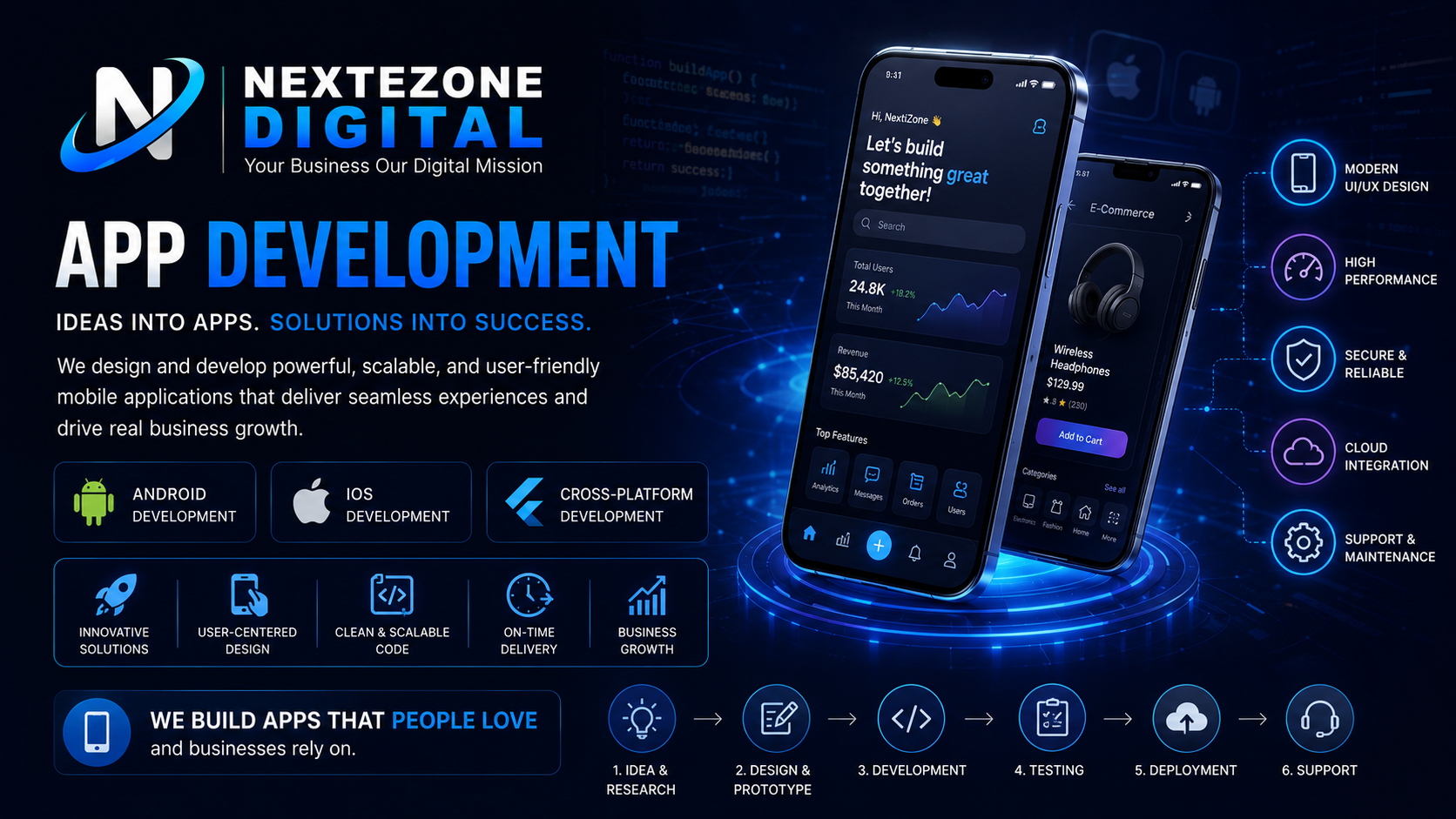
Introduction to Mobile App Development
Mobile app development is the process of creating software applications that run on mobile devices such as smartphones and tablets. It involves designing, coding, testing, and deploying apps to platforms like Android and iOS, aiming to provide users with seamless and efficient digital experiences.
Native App Development
Native app development refers to building applications specifically for a single platform, such as Android or iOS. Developers use languages like Java/Kotlin for Android and Swift for iOS. Native apps offer better performance, security, and access to device features.
Cross-Platform Development
Cross-platform development allows developers to create apps that work on multiple platforms using a single codebase. Technologies like Flutter, React Native, and Xamarin help reduce development time and cost while maintaining a consistent user experience.
User Interface (UI) Design
UI design focuses on the look and feel of a mobile app. It includes layout, colors, typography, and visual elements that make the app attractive and easy to use. A well-designed UI enhances user engagement and satisfaction.
User Experience (UX) Optimization
UX optimization ensures that users can navigate and use the app smoothly. It involves improving usability, accessibility, and overall interaction. A good UX design keeps users engaged and encourages them to return to the app.
App Performance Optimization
Performance optimization is essential to ensure that mobile apps run smoothly without crashes or delays. This includes optimizing code, reducing load times, managing memory efficiently, and ensuring fast response times for better user experience.
App Security
Mobile app security is crucial to protect user data and prevent unauthorized access. Developers implement secure authentication, data encryption, and regular updates to safeguard apps from cyber threats and vulnerabilities.
App Deployment and Maintenance
After development, apps are published on platforms like Google Play Store and Apple App Store. Continuous maintenance, updates, and bug fixes are necessary to keep the app functional, secure, and aligned with user needs.